DB Museum Nuremberg (German Railway Museum)
One of the world's oldest railway museums, featuring 200 years of German train history with vintage locomotives and interactive exhibits.
Featured Video
DB MUSEUM NURENBERG GERMANY
About This Destination
Exterior of the DB Museum's historic building, part of the Nuremberg Transport Museum complex.
The DB Museum Nuremberg – also known as the German Railway Museum – is the official railway museum of Deutsche Bahn and one of Europe's most important rail heritage institutions. Founded in the late 19th century, its origins date back to 1899 as the Royal Bavarian Railway Museum (with earlier roots in 1882), making it the oldest railway museum in Germany and often cited as the oldest of its kind in the world. The museum is housed in a grand historic building (built in 1925) near Nuremberg's old city walls. It spans 6,800 square meters of indoor exhibits, where visitors journey through over two centuries of railway history in Germany – from the very first steam locomotives of the 1830s to high-speed ICE trains of today.
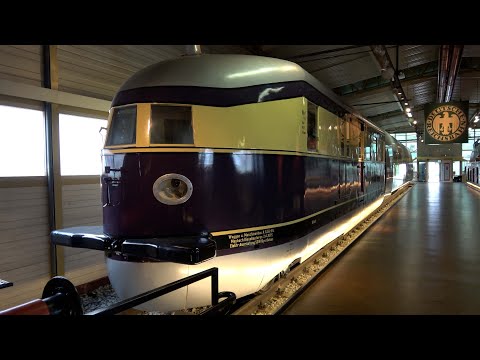
Inside, the museum's exhibits chronicle the development of rail transport in Germany in rich detail. The permanent exhibition "The History of the Railway in Germany" walks visitors through each era, highlighting not just technological advances but also social and cultural aspects of rail travel. A collection of around 40 historic locomotives and rail vehicles is on display in two large halls, representing legendary "iron horses" from different periods. Notable treasures include "Adler", a replica of Germany's first steam locomotive from 1835, the Nordgau (Germany's oldest surviving steam locomotive, built in 1853), King Ludwig II's lavish royal train coaches (dubbed a "castle on wheels"), and an array of vintage locomotives such as a streamlined Class 05 001 steam engine and a 1950s Trans Europ Express diesel railcar. The museum also features pieces of modern rail innovation, like a sectioned mock-up of an ICE 3 high-speed train, linking past to present.
Beyond the rolling stock, the DB Museum boasts extensive archives and library collections for researchers, with over 40,000 railway-related publications. Interactive displays are woven throughout: visitors can operate historic signal levers, explore a reconstructed railway tunnel, and engage with multimedia terminals. The museum complex also integrates the Museum of Communication (in the same building), and admission to the DB Museum includes the communication museum's exhibits on postal and telegraph history. Taken together, the DB Museum Nuremberg serves as a comprehensive center celebrating Germany's railroad heritage and its significance in industrial, economic, and social history.
Photo Opportunities
"Past meets present" in the museum's locomotive hall: a replica of the 1835 Adler steam engine (green) displayed beside a modern ICE train nose.
For railfans and photographers, the DB Museum offers many evocative scenes. In Vehicle Hall I, the striking side-by-side display of the tiny 19th-century Adler locomotive and the sleek white ICE is a must-capture shot – an image vividly illustrating 180 years of progress. The hall's high arched windows admit soft natural light onto the locomotives, especially in the morning, highlighting details like the Adler's bright brass boiler and the ICE's streamlined profile. Elsewhere, the ornate royal carriages of King Ludwig II (with their gilded interiors dubbed "Versailles on wheels") provide elegant close-up photo opportunities – look for decorative details and luxurious fabrics that reflect in the soft exhibit lighting.
The museum's outdoor exhibition yard is another prime spot. Here you can frame full-length shots of historic engines in daylight, using the vintage station platform and semaphore signals as authentic props. Late afternoon light often bathes the outdoor locomotives and rolling stock in a warm glow, ideal for dramatic compositions. Don't miss the Way of Human Rights installation along the adjacent street (part of the National Museum courtyard) as a unique backdrop merging culture and trains. Inside, a wide-angle lens is useful for capturing the length of engines in the halls, while a fast lens (or higher ISO) helps with dimmer areas since flash photography is not allowed. Tripods are permitted for private use as long as you don't disturb other visitors, so visiting on a quieter weekday can help if you need longer exposures. Whether it's the polished wood of a 19th-century coach or the powerful form of a steam locomotive, the DB Museum offers countless photogenic subjects that tell the story of railroading through the lens.
Location
Why Visit
For any railway enthusiast, the DB Museum Nuremberg is a pilgrimage site that uniquely showcases Germany's rich train legacy. It is the place to stand face-to-face with the legends of German railroading – from the tiny green Adler that pulled the country's first train in 1835 to the massive black steam engines that once thundered across Europe. The museum's collection spans all eras and traction types: you'll find early steam locomotives, elegant royal carriages, workhorse diesel engines, and pioneering electric locomotives that helped shape modern rail travel. Many of these exhibits are one-of-a-kind. For example, the Nordgau (an 1853 locomotive) is the oldest surviving steam engine in original condition in Germany, and an 1830s British coal wagon on display is the oldest railway vehicle on the European continent. The museum's emphasis on authentic artifacts means railfans can inspect the real hardware – massive drive wheels, connecting rods, boilers, and control cabs – up close. Standing next to the streamlined Class 05 001 steam loco (a former world speed record-holder) or peering into the Art Deco interior of a 1950s TEE diesel railcar is an experience you can't get from books or photos.
Beyond the machines, the DB Museum offers context that true railfans will appreciate. Detailed exhibits explain technical developments like the evolution of signaling systems, track design, and rolling stock engineering. You can see a cross-section of an ICE high-speed train and learn about the advances in aerodynamics and materials that make 300 km/h travel possible. The museum also preserves the romance and nostalgia of railroading: the beautifully restored wooden coaches, vintage station furnishings, and even the lavish Ludwig II royal train carriages (complete with plush velvet and wood paneling) evoke the golden age of rail travel. Whether your passion is for steam power, electric locomotives, or historical railway operations, the museum's comprehensive approach – combining impressive artifacts with knowledgeable interpretation – makes it a uniquely rewarding visit. It's no surprise the DB Museum is the largest collection of German railway history, with over 150 historic rail vehicles in its care, and recognized as a milestone museum on the European Route of Industrial Heritage. In short, if you love trains, this museum offers an unparalleled journey through the milestones of railway technology and history.
What to Expect
Visiting the DB Museum is an immersive journey through time. Upon entry, you'll pass through a modern foyer into grand exhibit halls that were once part of Nuremberg's old Verkehrsmuseum (Transport Museum) complex. Expect a self-guided experience – you can wander freely between the chronological displays. The main indoor exhibition leads you era-by-era: for instance, you'll start at a section depicting the first German railway (1835), complete with a replica of the Adler locomotive set on real tracks. Period-appropriate sounds (the huff of a steam engine, the clang of a station bell) are often softly playing in the background, enriching the atmosphere. As you move forward in time, each area is themed – one gallery might recreate a 19th-century station scene, while the next highlights the rise of electric trains with a full-size 1920s E 19 electric locomotive towering above you. Throughout the museum, signage is provided in German and English, describing each artifact and its significance. Interactive kiosks and touchscreens offer deeper dives (like schematics of how a steam piston works, or archival photos of railway workers). Every hour on the half-hour, head to the Model Railway room – here, an impressive 80 m² HO-scale layout springs to life in a 10-minute show demonstrating railroad operations, with dozens of model trains whirring around a miniature landscape. Kids and adults alike find this delightful, as lights blink and tiny signals switch on the sprawling model.
Outdoors, there's an open-air rail yard exhibit just across the street (accessible via a pedestrian crossing). In this fenced yard, you can walk along real rails and get up close to additional locomotives and carriages not inside the main building. These might include freight wagons, maintenance vehicles, or engines under restoration. The setting resembles a small station – there's even a historical semaphore signal and a section of track with a level crossing that visitors can operate. Families will notice the mini KIBALA Express train here: it's a pint-sized rideable train that loops through the outdoor area (generally running in warmer months or during special events). The atmosphere in the yard is fun and hands-on – you might hear the giggles of children riding the mini train or see enthusiasts photographing the undercarriage of a steam loco. The museum staff occasionally bring out volunteers or hold demonstrations here; for example, on certain days a historic diesel locomotive might be started up for demonstration, letting visitors hear its engine roar (if scheduled).
Generally, the museum is well-organized and not overly crowded except on peak days. There are benches and rest areas throughout, so you can sit and admire a particular exhibit (such as the royal coach or the model of the 1930s "Flying Hamburger" high-speed diesel train) at your leisure. The vibe is both educational and nostalgic. You'll likely encounter a mix of visitors: curious tourists, school groups excitedly following guides, and hardcore railfans studying every placard. Don't hesitate to talk to the museum attendants – many are enthusiasts themselves and can share extra tidbits or direct you to hidden gems (for example, the small exhibit on railway uniforms or the section about the famous Nuremberg–Fürth line, the first German railway). By the end of your visit, expect to have not only seen some magnificent trains, but to have gained a deeper appreciation of how railroads shaped Germany's history – all in the very city where it began.
Frequently Asked Questions
How to Plan Your Visit
Season and Schedule
The DB Museum is open year-round, with a regular schedule: Tuesday to Friday from 9:00 am to 5:00 pm, and weekends (Saturday, Sunday) and public holidays from 10:00 am to 6:00 pm. Mondays the museum is closed (except if a holiday falls on Monday) for maintenance. The museum operates on these hours in all seasons, though it observes a few holiday closures – expect it to be closed on Christmas Eve, Christmas Day, New Year's Day, and possibly a couple of other major holidays.
There is no specific "off-season" for this indoor museum, but visitation tends to peak in summer (July–August) when tourists travel, and in December when Nuremberg's famous Christmas Market draws visitors (the museum sometimes opens on a Monday in December to accommodate this, as noted by the Toy Museum's extended hours). Spring and fall are excellent times to visit for thinner crowds. During school term weekdays, you'll find the museum calmer (though occasional school field trips may visit in mornings). In winter, the museum is a great indoor activity – the trains look especially atmospheric against the cold weather outside, and you can comfortably enjoy the exhibits no matter the temperature. If you're interested in special programming, watch for temporary exhibits and events: for instance, the museum hosts special exhibits like "Under Pressure" (on railway engineering), and events such as family story hours or historical commemorations. Check the museum's online Events calendar for dates like steam locomotive anniversary celebrations or the annual "Long Night of Museums" when the museum might have extended evening hours. Generally, arriving right at opening (9 am on weekdays, 10 am on weekends) lets you enjoy the halls with minimal crowds for the first hour or two.
Ticket Information
Admission is affordable. Standard tickets are €10 for adults and €6 for youth (ages 6–17). Children under 6 years old enter free. There's a great Family ticket for €20 that covers two adults and up to 4 children – perfect for a family outing. Seniors, students, and other eligible visitors can get a reduced rate of €8 (bring ID for proof of concession). If you're a railway buff staying longer, consider an Annual Pass – €33 for an adult or €60 for a family – which grants unlimited visits for a year. Notably, your DB Museum ticket also includes same-day entry to the neighboring Museum for Communication at no extra charge.
You can purchase tickets at the museum's front desk on arrival – there is usually no long line, and credit/debit cards are accepted (except American Express). Tickets are also available online via the museum's website ("Tickets kaufen") if you prefer to buy in advance, but it's not mandatory. If you arrive by train with a Deutsche Bahn long-distance ticket, you qualify for a small discount on museum entry (a DB rail ticket or rail pass shown at the counter typically reduces adult admission by a couple of euros). Similarly, holders of the Nürnberg Card (the city tourism pass) get free entry to the DB Museum.
While general admission is open, guided tours (in German or English) have an additional fee if you want a docent-led experience – these can be booked in advance on the website or at the desk. Guided tours often cost around €3–€5 on top of admission, or a flat fee for groups. The museum offers special themed tours (e.g., focusing on the ICE trains or the royal coaches). No timed entry system is in place for normal visits, so you can arrive any time during opening hours and stay until closing. If you plan to attend a specific event (like a lecture or a family day activity), those may require pre-booking or have limited spots – check the event details on the official site. Lastly, if you're a BahnCard 100 holder with BahnBonus status (or certain German rail employee groups), admission might be free or discounted – worth inquiring with the museum.
Accessibility Details
The DB Museum is committed to accessibility so that all visitors can enjoy the exhibits. Wheelchair access is provided throughout: there is a step-free route via the courtyard (rear entrance) that leads into the foyer at ground level. Once inside, all exhibit floors can be reached by elevators or ramps. The museum has two wheelchairs available for visitors to borrow, and folding chairs if someone needs to sit while exploring. The galleries have wide aisles suitable for wheelchairs and strollers. Tactile elements and audio guides can assist visitors with visual impairments, though not every exhibit is fully adapted.
For those with limited mobility, benches are placed in many rooms for rest. The lighting is generally moderate and there aren't overly loud noises, which helps visitors with sensory sensitivities (except perhaps during the model railway show which has some sound effects). Accessible restrooms are located on the ground floor and are clearly marked. If you have hearing difficulties, an audio guide with volume control is available; the museum doesn't currently advertise induction loops in exhibit areas, but staff can provide written materials or answer questions one-on-one. Service animals (guide dogs, etc.) are allowed inside. The museum participates in the "Travel for All" accessibility program and is certified for meeting certain accessibility standards, which should give confidence to visitors with disabilities. If you have specific needs, you can call ahead to the Service Center (Mon–Fri mornings) to discuss accommodations. The team is helpful and can arrange things like a portable ramp if needed for a particular doorway, or advise on best visiting times.
Families with young children will find the museum stroller-friendly. There are designated stroller parking spots (e.g., near the cloakroom) so you don't have to push through tighter exhibit spaces. Baby changing facilities are available in restrooms. The museum's family focus means you'll see kids crawling around the play area and it's generally a welcoming space for all ages.
What to Bring
Comfortable shoes: You'll be on your feet a lot, walking through large exhibit halls and possibly the outdoor yard. The floors are smooth and level, but the sheer amount of content means a fair bit of walking (and you may find yourself circling back to see a favorite train again).
Seasonal clothing: The museum is indoors and climate-controlled, so normal attire is fine. In winter, bring a coat, but note that you can use lockers or the cloakroom to store heavy jackets while inside. If visiting in summer, the indoor halls are cool; however, if you explore the outdoor exhibits, have a hat, sunscreen, or umbrella depending on the weather. Nuremberg summers can be warm, and the outdoor yard has limited shade.
Camera gear: Definitely bring a camera or smartphone for photos – there are countless photo ops. If you're a serious photographer, a wide-angle lens helps capture full locomotives in tight spaces. A tripod or monopod is allowed for personal use (not on crowded days), so you may bring one; just be considerate of other visitors. Remember no flash, so low-light settings are useful.
Water bottle: It's wise to have a bottle of water, especially if you visit on a hot day or with kids. There is a café on site (see below) where you can buy drinks and snacks, but carrying a water bottle helps you stay hydrated as you tour. There are seating areas where you can take a break and sip water (just avoid drinking or eating directly over historic exhibits).
For families: Bring any small essentials for kids (diapers, etc.), but note that large bags may need to be stored in lockers or coat check to prevent accidentally bumping into exhibits. The museum has a gift shop where kids might beg for a souvenir (like a toy train or book), so having a spending plan (or ground rules) can be handy.
Notebook/sketchbook: If you're a rail historian or modeler, you might want to jot notes or sketch details of the rolling stock. Photography is easier, but some enthusiasts bring notebooks to record specific locomotive numbers or design ideas inspired by the exhibits.
Generally, you don't need any special equipment – the museum provides all the information signage and even offers an app-based audio guide if you have a smartphone (free Wi-Fi is available in the museum). Just come prepared to be engaged and possibly to spend longer than you anticipated, as there is a lot to see!
Photography Tips
Capturing the magic of the DB Museum on camera is very rewarding. Here are some insider tips:
Best Vantage Points: In the main hall, the Adler and ICE side-by-side make for an iconic shot. Try framing from an angle where you see the Adler in the foreground and the ICE nose behind it – this contrast of old and new is visually striking. Another great spot is by King Ludwig II's royal coaches – the opulent carriages are behind barriers, but you can angle your camera to catch the richly colored interior through the open door. The Bismarck salon carriage, with its historic compartments, also provides a neat composition; position yourself so the carriage fills the frame and capture the depth of its 4 rooms in one shot.
Optimal Lighting: The museum's indoor lighting is generally even. Morning light through the high windows can cast gentle rays on the exhibits in Hall I. If you prefer more diffused lighting, mid-afternoon is good as the skylights are not directly harsh. Avoid using flash (it's not allowed and also creates glare on polished metal and glass). Instead, use a higher ISO or a faster lens aperture to get brighter shots. The outdoor yard is best photographed during the golden hour (late afternoon) when the sun is lower – the historic locomotives look fantastic with a warm glow and long shadows. If you visit in summer, around 4–5 pm lighting is often excellent (and you'll still have time before the museum closes at 6).
Recommended Lenses: A wide-angle lens (around 10-20mm on APS-C or 16-35mm on full-frame) will let you capture full locomotives in tight indoor spaces. For example, to fit the entire length of a steam engine or the breadth of a display hall, wide-angle is key. It also produces dramatic perspective – you can stand near the pilot of a steam locomotive and emphasize its size. A standard zoom (24-70mm) is useful for general shots and detail shots of equipment (like close-ups of a locomotive's driving wheels or the nameplates). If you love details, bring a macro or close-focusing lens to get shots of builders' plates, old tickets, model train miniatures, etc., in sharp detail. A telephoto isn't very necessary inside, but could be handy outdoors if you want to compress perspective of trains lined up in the yard or isolate features on the building.
Tripod Use: As mentioned, tripods are allowed as long as they don't impede others. On a less busy weekday, you could set up a tripod to photograph the dimmer areas (like the interior of a passenger carriage) with a long exposure for clarity. If using a tripod, stick to the edges of galleries and be ready to pause if groups pass by. A monopod can be a good alternative for stability without taking much space.
Angles and Composition: Don't just shoot everything from eye level – crouch down to rail height to get an engineer's perspective of the trains, or try an overhead shot if you find a balcony or staircase (some exhibits have mezzanine viewing spots). For instance, an elevated view of the model railway layout can capture the whole scene that ground-level shots miss. Look for reflections too: the shiny locomotives might reflect each other or the lights; the large station clock on display might reflect in a window for an artsy effect.
Respect and Restrictions: Be mindful of ropes and barriers – they're there to protect the artifacts, so lean in with your camera rather than crossing lines. Also, avoid tripod use in the model train show room during a show, as lights dim there and people gather. The museum's visitor regulations ask to not disturb others, so if you're doing a more involved shoot, doing so when it's quiet ensures you won't inadvertently photobomb someone's experience. Lastly, share your best snaps! The museum and Nuremberg tourism love when visitors post photos (use the hashtag #DBMuseum or tag the museum's social media, and you might get a re-share).
By following these tips, you'll come away with wonderful images that capture both the grandeur and the fine details of this rail heritage treasure.
Travel Information
By Air
If you're flying in, the nearest airport is Nuremberg Airport (NUE), which is a small international airport just about 5 miles (8 km) north of the city center. From Nuremberg Airport, it's very easy to reach the museum: the airport is connected to the city by the U2 subway line – you can take the U2 metro directly to Opernhaus station (around a 15-minute ride), which is about a 5-minute walk (0.1 mi) to the museum's entrance. By car or taxi, the trip from the airport to the museum takes roughly 15–20 minutes. Taxis and rideshares (like Uber) are available at the airport; fare to central Nuremberg is around €20–€25.
For more flight options, especially intercontinental flights, Munich International Airport (MUC) is a major hub about 105 miles (170 km) to the south. If you arrive via Munich, you can either rent a car (roughly 1.5–2 hours drive via A9 autobahn to Nuremberg) or take a direct high-speed ICE train from Munich Airport (or central Munich) to Nuremberg (the train takes about 1 hour). Similarly, Frankfurt Airport (FRA), Germany's busiest, is about 140 miles (225 km) northwest – direct ICE trains connect Frankfurt Airport to Nuremberg Hauptbahnhof in as little as ~2.5 hours. Once in Nuremberg, follow the By Train directions below to reach the museum.
By Train
Given the subject matter, arriving by train is a fitting choice! The museum is conveniently located just a few minutes' walk from Nürnberg Hauptbahnhof (Nuremberg Main Station). Nuremberg Hbf is a major rail hub with frequent ICE (InterCity Express) and IC trains from all over Germany. For example, Nuremberg is only about 1 hour from Munich by ICE (95 miles / 150 km), about 2.5 hours from Frankfurt (140 miles / 225 km), and ~3 hours from Berlin (via high-speed line). International trains from Vienna, Prague, and other cities also serve Nuremberg. Once you arrive at Nuremberg Hbf, use the west exit (signposted toward "Altstadt" or old town) – the DB Museum is around 0.3 miles (500 m) west of the station. It's an easy 5–7 minute walk: from the station exit, head left along Bahnhofstrasse and then south on Lessingstrasse, or simply follow signs for the "Verkehrsmuseum" or "DB Museum.".
If you prefer not to walk, you can take one stop on the U-Bahn: from Nuremberg Hbf, catch the U2 or U3 subway one stop to Opernhaus and you'll be about 100 meters from the museum. But honestly, walking is just as quick given the short distance. Local S-Bahn (suburban trains) and trams also stop at the main station, making it a central transfer point. For instance, if you're coming from the nearby city of Fürth (site of the first German railway terminus in 1835), you can hop on a quick 10-minute S-Bahn ride to Nuremberg Hbf.
Railfans might note: Nuremberg was the terminus of Germany's very first railway line (the Bayerische Ludwigsbahn to Fürth). While that original line is now part of the city S-Bahn, you're literally retracing history by arriving on rails. In fact, the Adler locomotive at the museum commemorates that route between Nuremberg and Fürth. If you have a Deutsche Bahn ticket for your journey to Nuremberg, remember you get a discount on museum entry – a nice perk of combining train travel with your museum visit.
By Car
Nuremberg is well-connected to Germany's autobahn network, so driving can be a convenient option. The city lies at the junction of several major highways: the A3 (coming from Frankfurt or from Regensburg), the A9 (from Munich or Berlin), the A6 (from Prague direction or Stuttgart), and the A73 (from northern Bavaria) all serve Nuremberg. If you're coming from Munich, you'll likely take the A9 north (105 miles, about 1.5 hours) to reach Nuremberg. From Frankfurt, the A3 east (140 miles, ~2 hours) is the main route. The highways are well-signposted for Nürnberg (Nuremberg).
Once near Nuremberg, follow signs for "Nürnberg Zentrum" (city center). The museum is in the center, just outside the old town walls on the south-west side. A helpful tip: look for signs for "Hauptbahnhof" (the main train station) or "Verkehrsmuseum". From the A73 or A9 approach, you'll typically get onto the "Ring" road around the old town (Frauentorgraben). The museum is located along Lessingstrasse, which intersects Frauentorgraben near the Opernhaus (Opera House). As you circle the historic city wall, keep an eye out for brown tourist signs pointing to "DB Museum" or "Verkehrsmuseum". According to the museum's directions, from the motorway you should head toward "Centrum" and then "Hauptbahnhof", and once on the ring road, look for Frauentorgraben, then turn onto Lessingstrasse for the museum.
Do note that driving in central Nuremberg can involve some traffic, especially during rush hour, and parts of the old town are pedestrianized or restricted. But the museum's location just outside the wall makes it easier than driving into the heart of the Altstadt. The street address (Lessingstr. 6) can be entered into your GPS. Travel times by car: from Munich ~1h45m (on A9), from Frankfurt ~2h (on A3), from Stuttgart ~2h (on A6 then A81). The route from Munich on A9 is fairly straightforward and typically smooth (the A9 has been upgraded and flows well), though beware of speed limits and traffic near Nuremberg.
As for scenic routes: if time permits, you could detour via the Romantic Road or through Franconian countryside for a more scenic drive into Nuremberg, but those will add time. One semi-scenic alternative is from Munich, exit A9 at Altmühltal to pass through the Altmühl Valley and then rejoin A9 – it's a pretty area with limestone cliffs. But if your focus is the museum, the direct highways are fastest.
Parking
Parking in central Nuremberg requires a bit of planning. The DB Museum itself does not have a large dedicated public parking lot (only a few spaces reserved for disabled visitors right in front). However, there are several public parking garages and lots within a short walk. One convenient option is the "Karthäuserstraße Parkhaus" or the "Opernhaus Parkhaus", both located near the Opera House, roughly 2 blocks from the museum. Another is the "Bahnhof Parkhaus" at the main train station. These garages typically charge an hourly fee (around €2-€3 per hour). An example: the garage at Sandstrasse 26 (a bit further, near Germanisches Nationalmuseum) is also within 5 minutes walk and often has space.
On-street parking around the museum is limited. The streets directly adjacent (Lessingstrasse and Deutsche Bahn Platz) have some metered spots, but most are often occupied and may have time limits. Given the location, it's easier to head straight to a garage. The city of Nuremberg has an electronic Parking Guidance System that shows available spaces in real-time on signs as you approach the center. Look for signs directing you to Parkhaus Opernhaus, Parkhaus Hauptbahnhof, or Parkhaus Kornmarkt (all are within 5-10 minutes walk).
If you're traveling by RV or bus, note that driving into the city center with large vehicles is tricky. There are designated bus parking areas outside the city walls (e.g., near Kongresshalle by the Rally Grounds or at Dünkelbergerstrasse). For an RV, a Park & Ride might be better (see below) and then take transit in.
During major events (like the Christmas market in December), parking fills up quickly downtown. In such cases, using a Park & Ride lot on the outskirts and taking public transit can save hassle. For example, you could park at Fürth Stadthalle P+R or Rothenburger Str. P+R and hop on the U-Bahn. But under normal circumstances, parking at a central garage is fine. Expect to pay around €6-€8 for a 3-4 hour stay. The museum visit itself is a few hours, so often that's all you need.
One last note: as mentioned, there are 4 disabled parking bays right outside the museum entrance on Lessingstrasse. These are clearly marked and should be used only by cars with the appropriate permit. They provide the shortest possible access (directly in front of the museum's ramped side entrance). If you have mobility issues and are arriving by car, aim for those or have someone drop you off in front while they park the car in a garage.
Local Transportation
Nuremberg's local transport network (VAG) makes getting around town and to the museum simple. The DB Museum is in a very walkable area – it's about 10 minutes on foot from the main market square in the Old Town, and even closer to many hotels and the train station. If you're already in the city center, you can likely walk to the museum.
For those using public transit, the closest stops are:
U-Bahn (Subway): Lines U2 or U3 to Opernhaus station. The Opernhaus (Opera House) underground station is roughly 100 m from the museum – essentially around the corner. When you exit Opernhaus station, you'll see the large sandstone museum building (part of it still labeled "Verkehrsmuseum" and "Museum für Kommunikation") right there.
Tram: Tram line 5 (if it's still active) used to run nearby, but currently Nuremberg's tram network doesn't have a stop directly at the museum. The closest tram stop might be "Hauptbahnhof" or "Plärrer", but those are a bit further (10 min walk).
Bus: Several city bus lines stop at Hauptbahnhof or Plärrer. For instance, if you're at the Documentation Center (southeast of town) and want to come to the museum, bus 36 goes to Plärrer area.
S-Bahn (Commuter rail): The S-Bahn lines all converge at the main station. If coming from suburbs or the airport by S-Bahn, just get off at Hauptbahnhof and walk or connect to U2 one stop.
Nuremberg's public transport uses a common ticketing system. If you have a day ticket or a Nürnberg Card, you can use it on buses, trams, and the U-Bahn. The Nürnberg-Fürth public transit day pass is handy if you plan multiple trips in one day (only ~€8 for a group ticket). But given the museum's central locale, many attractions and hotels are reachable by foot.
Taxis and rideshares: Nuremberg has plentiful taxis – you can find them queued at the train station or call one. A taxi ride within the city center is usually under €10. For example, from Nuremberg Castle down to the DB Museum might be €8 and 10 minutes. Rideshare apps like Uber do operate in Nuremberg but often they dispatch regular taxis (given local regulations). However, since distances are short, many visitors just walk.
Walkability and Biking: The area around the museum is pedestrian-friendly. The entrance is just outside the old city wall, and sidewalks are wide. You can easily combine a museum visit with a stroll through Nuremberg's Old Town. In fact, Germanisches Nationalmuseum and other sites are just next door. If you enjoy biking, Nuremberg has bike lanes on many streets. There is a bike-sharing program (look for VAG Rad stations or other services). There's even a VAG bike rental point noted at the Documentation Center, and likely some near the center. You could rent a bike and cycle along the city walls to the museum. Bike racks are available near the museum entrance to lock up.
Overall, local transportation in Nuremberg is efficient and user-friendly, but given the DB Museum's prime location, you may find you hardly need transit at all unless coming from outer districts. If staying in Altstadt or near the station, just enjoy the short walk to the museum, taking in some city sights on the way.
Nearby Lodging
- IntercityHotel Nürnberg
A modern 3-star hotel located adjacent to Nuremberg's main railway station (Eilgutstr. 8). It's only a 5-minute walk (0.3 mi) from the DB Museum, making it ultra-convenient for railfans arriving by train. Why it's great for rail enthusiasts: Many rooms overlook the station tracks or the historic station building, and every booking includes a free public transport pass for Nuremberg – ideal for exploring tram lines or visiting the rally grounds museum. The hotel offers soundproofed rooms, a hearty breakfast, and that unmistakable "next to the tracks" vibe that trainspotters will love. Step out the door and you're practically on the platform!
- Le Méridien Grand Hotel Nuremberg
A 5-star historic hotel directly across from Nuremberg Hauptbahnhof (Bahnhofstr. 1-3), about 0.4 miles from the DB Museum. This century-old grand hotel boasts elegant Art Nouveau architecture and luxurious rooms. Why railfans love it: Staying here is like stepping back into the golden age of railway travel – it's the former station hotel dating to 1896, and famous guests from the railway era (including the Beatles and the Dalai Lama) have stayed here. You can walk to the museum in 8 minutes or simply hop on the U-Bahn for one stop. The hotel's location at the entrance to Old Town and beside the station means you can watch activity at the station plaza from the lobby. With its historic charm, it's perfect for travelers who appreciate both trains and tradition.
- NH Collection Nürnberg City
A 4-star superior hotel located at Bahnhofstr. 17-19, roughly 0.5 miles from the DB Museum (an easy 10-minute walk). It's a modern, stylish hotel renovated in 2016 with 244 rooms, offering amenities like a gym and on-site parking. Why it's good for railfans: It's very close to the station and the museum, yet also at the edge of the picturesque Old Town. You can walk through the Handwerkerhof craft alley (an old-town enclave by the station) on your way to the museum. The NH's central location means you're also near tram and U-Bahn lines if you want to venture to rail-related sites (like the Tram Museum in St. Peter, if interested). The hotel itself is quiet and comfortable – a great base to recharge after a day photographing locomotives. Plus, being near the station means quick access to late-night food or that early train out.
Official Resources
More Videos
Quick Information
Country
Germany
Region
Bavaria
City
Nuremberg
Address
Lessingstrasse 6, 90443 Nuremberg, Germany
Nearest Major City
Munich
Duration
2–3 hours (plan a half-day visit to fully explore all exhibits)
Admission
€10 per adult (children 6–17 €6; under 6 free)
Best Season to Visit
Year-round. The museum's indoor halls make it great in any weather, while summer offers pleasant conditions to enjoy the outdoor exhibit yard and the kids' miniature railway. Weekday mornings or off-peak seasons see fewer crowds, whereas weekends and school holidays are busier with families.