Spotting Location
Rosenberg Junction
Historic railroad junction where UP's Glidden Subdivision, BNSF's Galveston Subdivision, and CPKC's Rosenberg Subdivision converge at an at-grade diamond. Adjacent to the Rosenberg Railroad Museum featuring preserved Tower 17, the last manned interlocking tower in Texas.
Spotting Location
Rosenberg Junction
Historic railroad junction where UP's Glidden Subdivision, BNSF's Galveston Subdivision, and CPKC's Rosenberg Subdivision converge at an at-grade diamond. Adjacent to the Rosenberg Railroad Museum featuring preserved Tower 17, the last manned interlocking tower in Texas.
Photos
 Roy Luck
Attribution License
Roy Luck
Attribution License
Roy Luck
Attribution License
Roy Luck
Attribution License
Roy Luck
Attribution License
Roy Luck
Attribution License
Roy Luck
Attribution License
Roy Luck
Attribution License
Trainspotting Experience
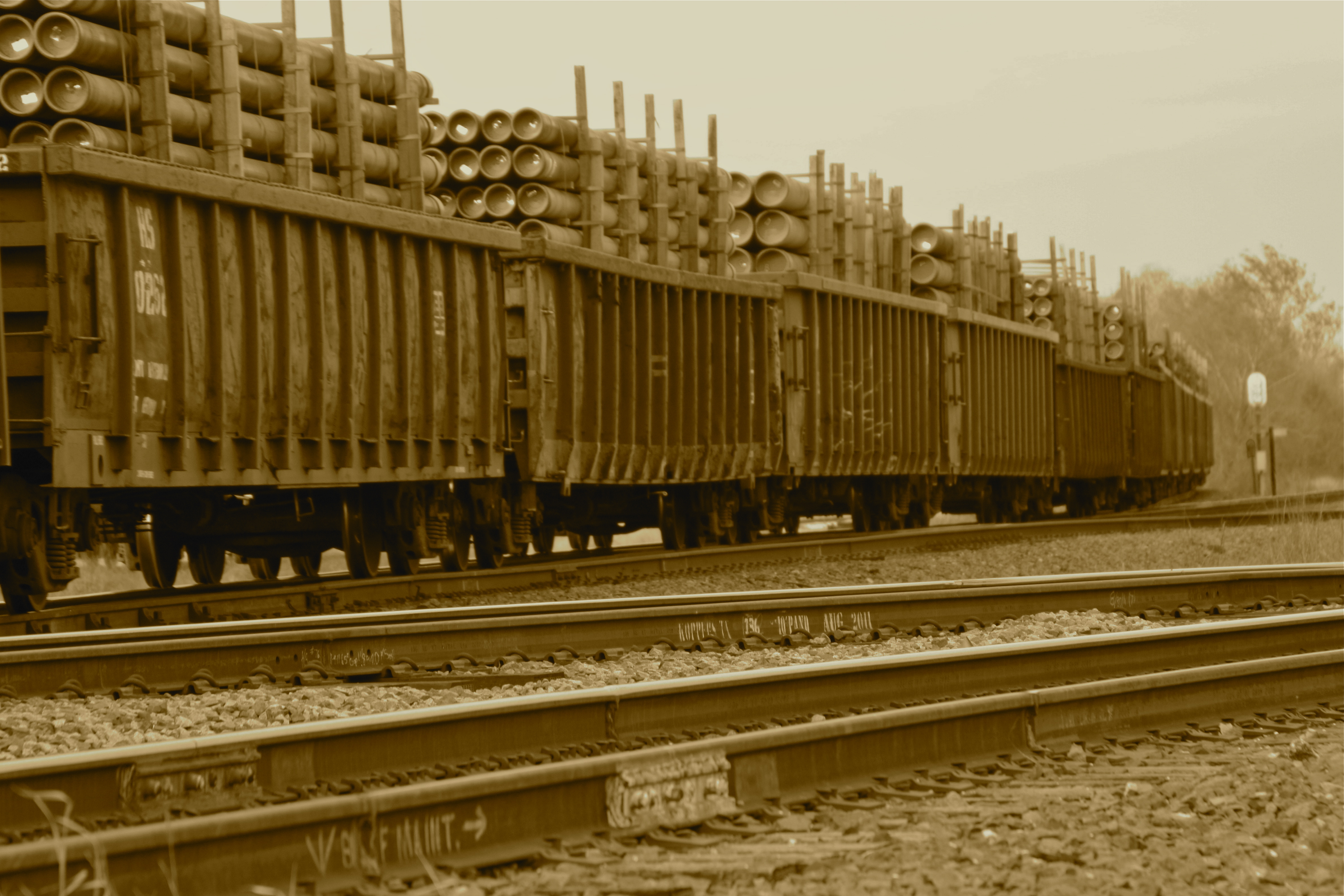
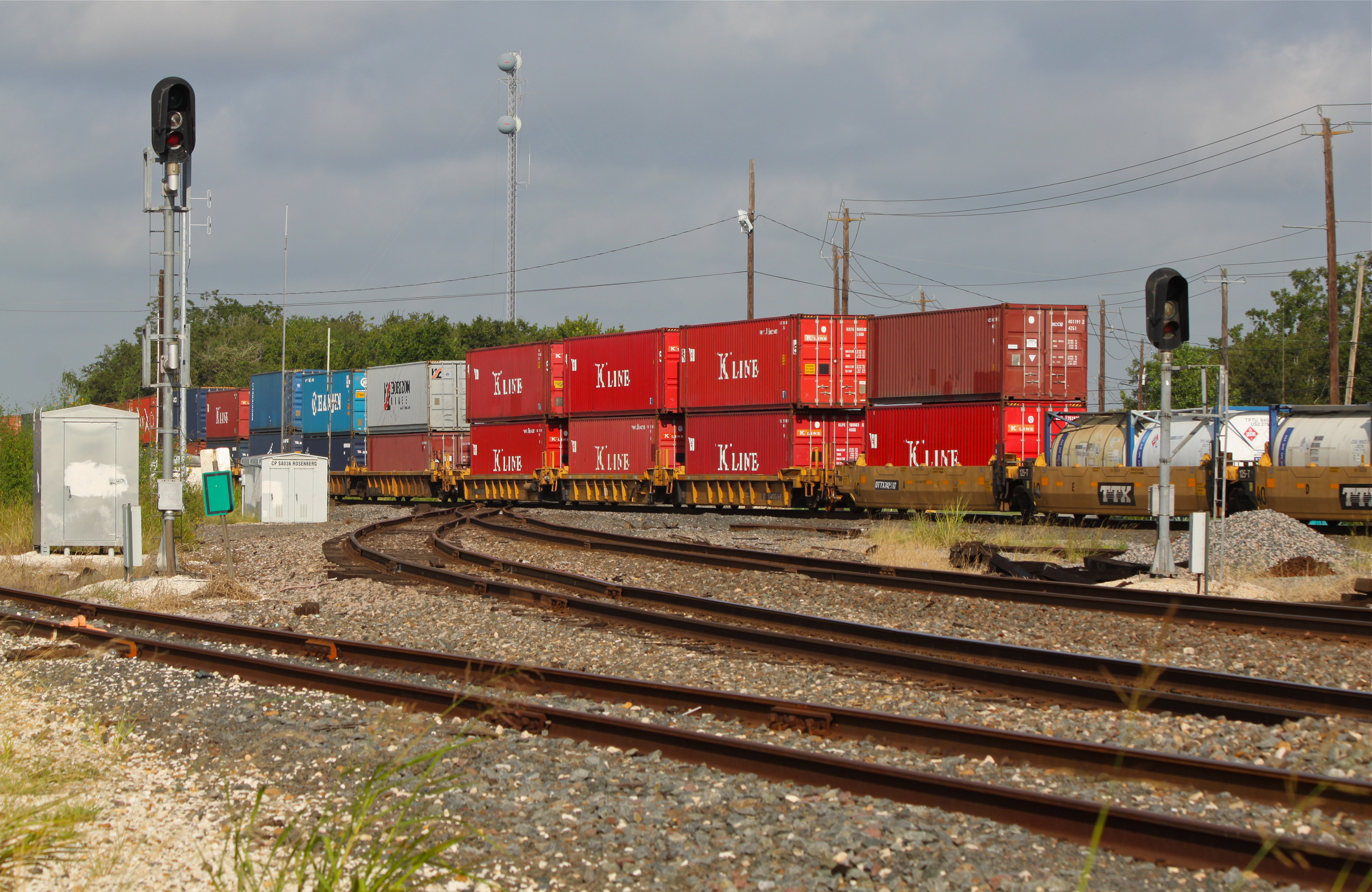
Rosenberg Junction sits at the crossing of Union Pacific's east-west Glidden Subdivision (the former GH&SA Sunset Route) and BNSF's north-south Galveston Subdivision (the former GC&SF main line). A third railroad, CPKC (formerly KCS), operates its Rosenberg Subdivision southward toward Victoria on the rebuilt "Macaroni Line," which rejoined service in June 2009 after a 20-year dormancy. The at-grade diamond where these lines converge is the heart of the action, and it sits immediately adjacent to the Rosenberg Railroad Museum at 1921 Avenue F.
From the museum's observation deck or the public sidewalk along Avenue F, you stand roughly 30 feet from active mainline tracks. Trains approach at track speed on the main lines, then slow significantly to cross the diamond. The crossing creates natural "stacking" as dispatchers in UP's Spring, Texas control center manage priority between east-west UP movements and north-south BNSF traffic. This gives railfans extended dwell time to photograph power consists and read car markings. Bring hearing protection — the airhorns echo off nearby downtown storefronts at very close range.
Landscape, Setting & Local Atmosphere
Rosenberg sits on the Gulf Coastal Plain about 30 miles southwest of Houston, at roughly 90 feet elevation. The terrain is flat in every direction, providing unobstructed sightlines along the tracks for half a mile or more. The surrounding landscape is classic Southeast Texas: scattered live oaks, pecan trees, and low grass along drainage ditches beside the right-of-way. Downtown Rosenberg's small-town commercial buildings — including antique shops and cafes along 2nd Street and Avenue F — form a modest backdrop on the south side of the tracks.
Summers are hot and humid with temperatures routinely above 95°F and afternoon thunderstorms common from June through September. Winters are mild, rarely dropping below freezing, with frequent clear skies. Spring and fall offer the most comfortable conditions for extended trackside visits. The museum grounds include a shaded pavilion and benches, providing some relief from the Texas sun.
Type & Frequency of Train Activity
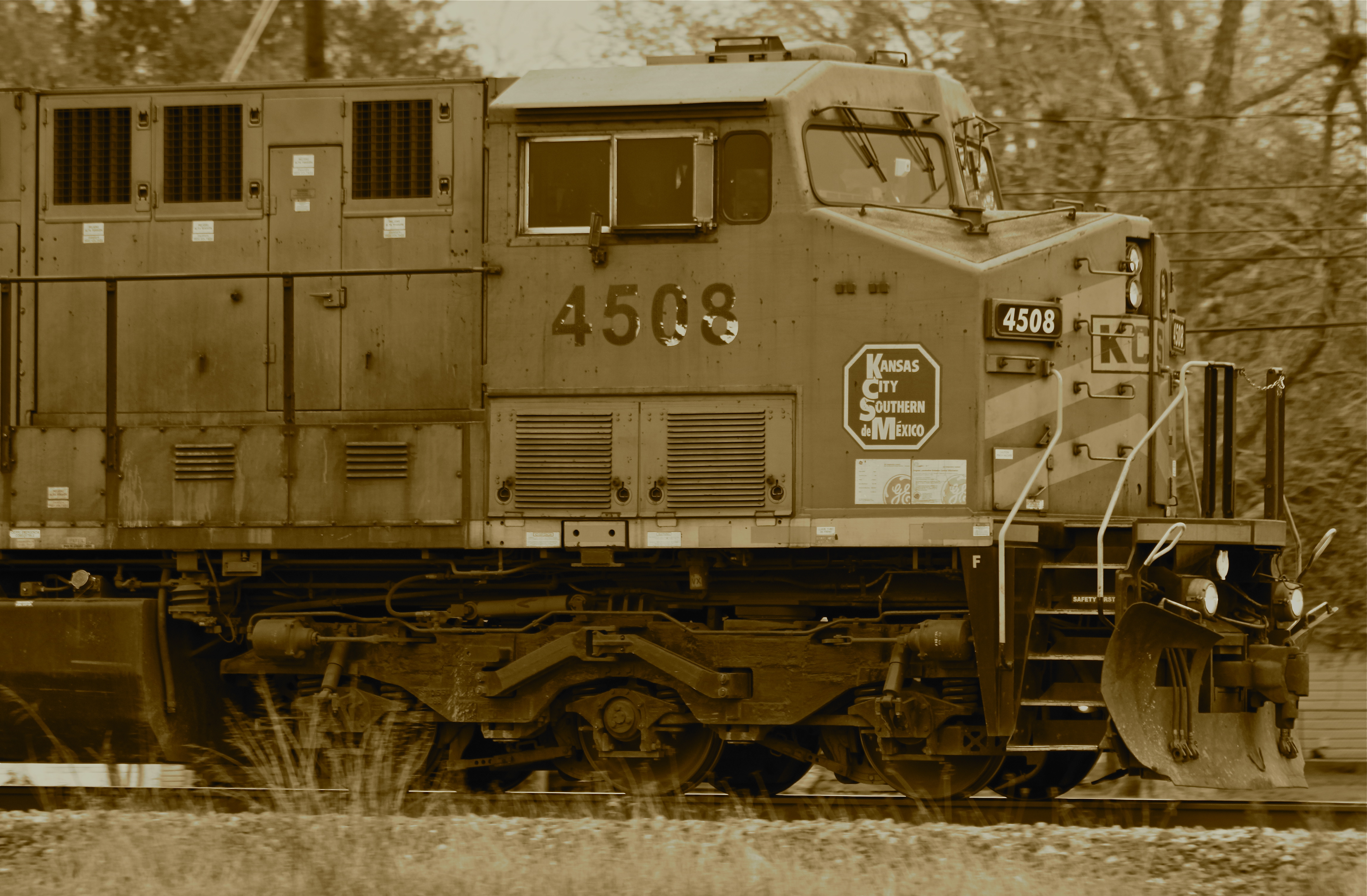
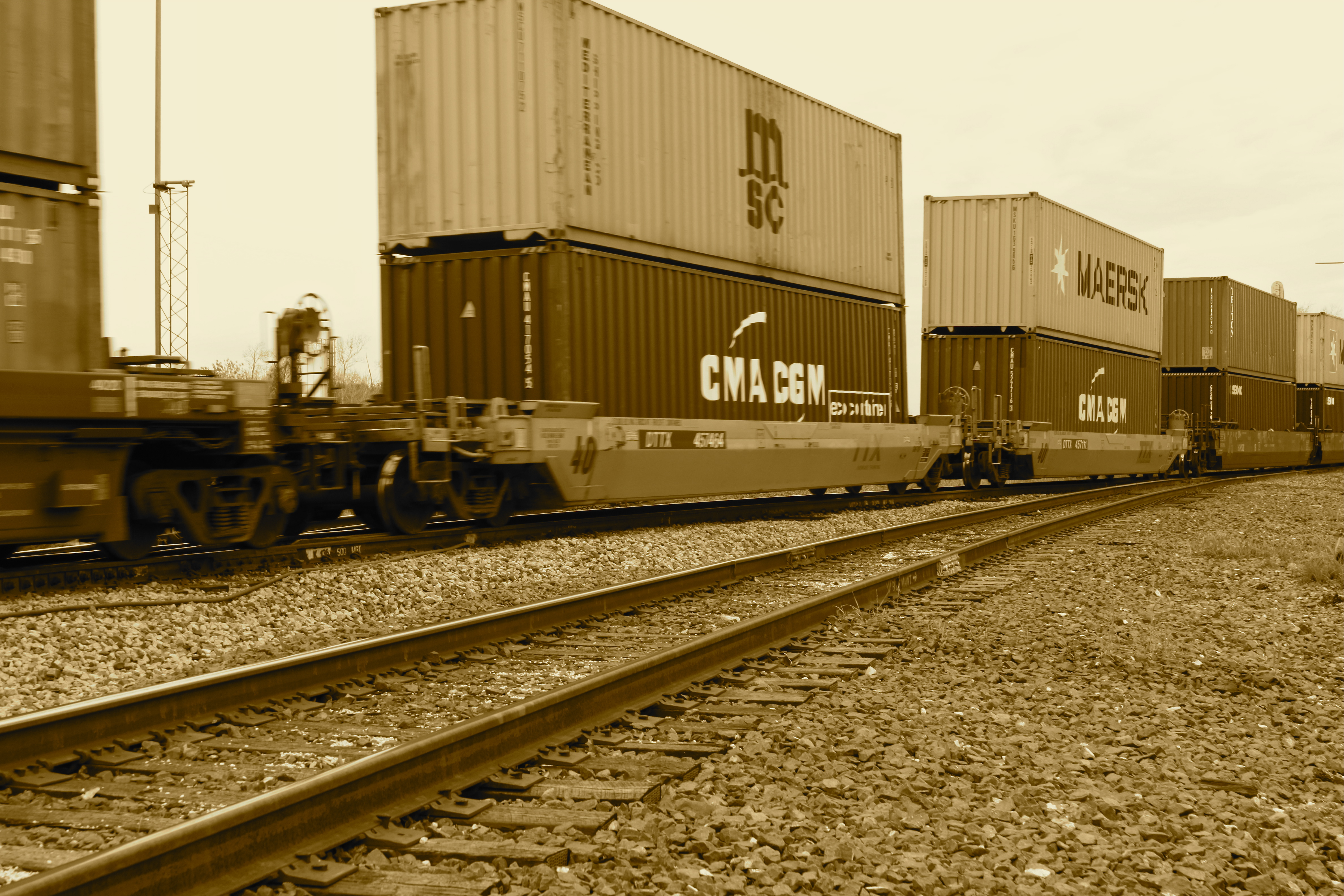
Three Class I railroads operate through Rosenberg. Union Pacific runs the Glidden Subdivision east-west between San Antonio and Houston, carrying heavy intermodal, manifest, unit grain, and petroleum trains. BNSF operates the Galveston Subdivision north-south between Temple and Galveston, handling intermodal, grain, and industrial traffic. CPKC (formerly Kansas City Southern, merged with Canadian Pacific in April 2023) runs its Rosenberg Subdivision southward to Victoria on the rebuilt Macaroni Line, primarily carrying intermodal traffic connecting the U.S. Midwest to Mexico via Laredo. CPKC also has trackage rights on UP through Rosenberg between Beaumont and points south.
Combined traffic reportedly exceeds 60 trains per day across the three railroads. One N-scale modeler documenting the junction recorded 77 trains in a single 24-hour period. Amtrak's Sunset Limited (trains #1/#2) passes through tri-weekly in each direction on UP's Glidden Subdivision, running between New Orleans and Los Angeles. Train lengths commonly range from 80 to over 150 cars on heavy freight moves, with distributed power common on longer UP trains.
Best Angles for Photos & What Railfans Enjoy Most
The museum's observation deck provides an elevated vantage point near the diamond, placing you roughly eye-level with locomotive cab windows. Morning light from the east favors shots of westbound UP trains and southbound BNSF movements. Late afternoon golden light from the west works well for eastbound trains against the downtown Rosenberg backdrop.
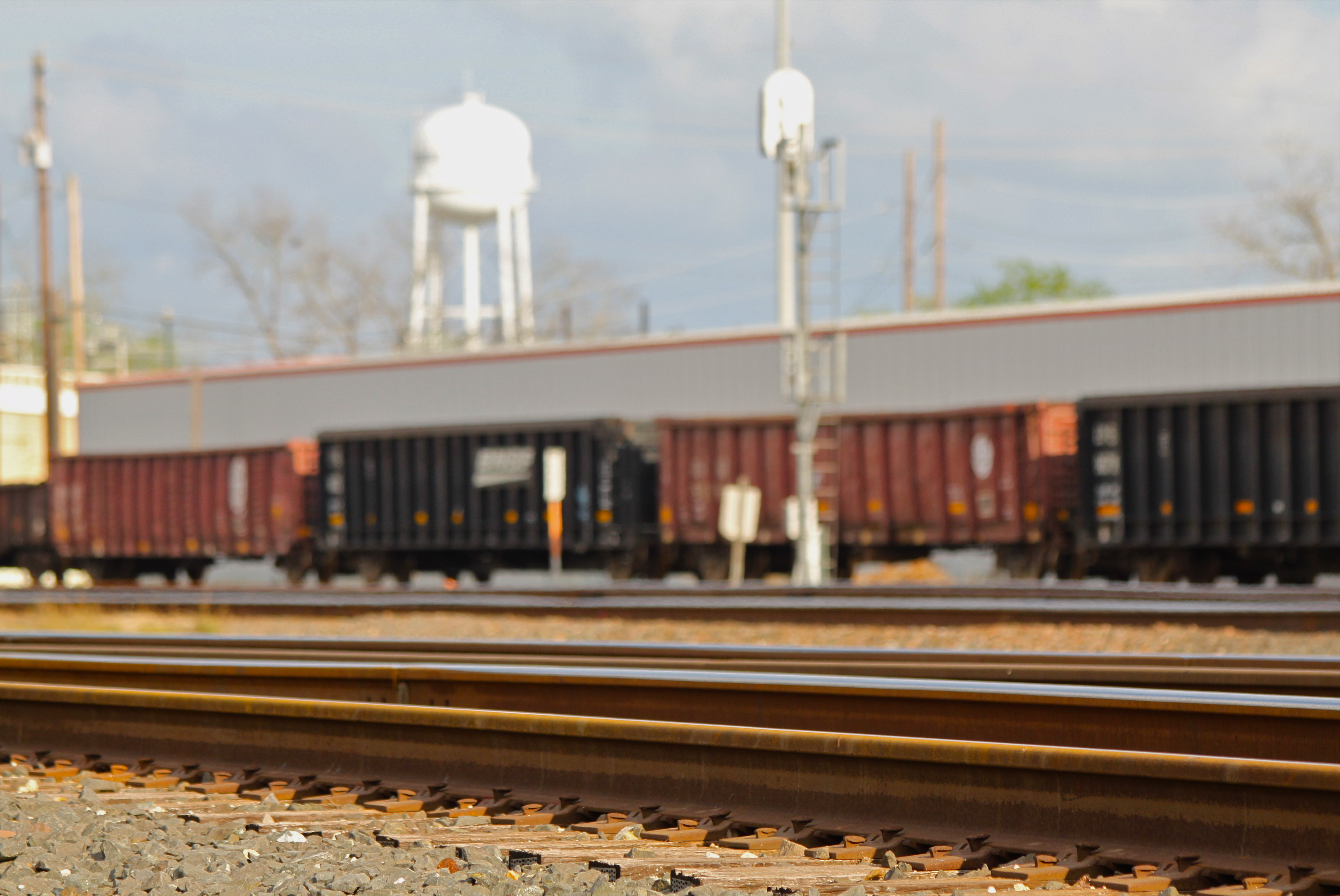
From the Avenue F sidewalk on the north side of the street, you can get tight side-profile shots of BNSF trains heading toward Galveston. A telephoto lens (200mm+) compresses the diamond and can capture power from both railroads in a single frame when timing aligns. The museum's cream-colored depot facade and a vintage "ROSENBERG" water tower provide distinctive backdrops that immediately identify the location. Bring wide-angle capability as well — trains pass extremely close and a standard lens captures the full sense of scale at such short distance.
Historical or Cultural Relevance
The junction was created in 1880 when the Gulf, Colorado & Santa Fe Railway (GC&SF), building north from Galveston, crossed the Galveston, Harrisburg & San Antonio Railway (GH&SA) Sunset Route heading west toward San Antonio. The crossing was named Rosenberg Junction after Henry von Rosenberg, a Swiss immigrant who was the first president of the GC&SF. A town quickly grew around the junction, and by 1883 it was formally established.
In 1882, Count Joseph Telfener began building the New York, Texas & Mexican Railway — known locally as the "Macaroni Line" — from Rosenberg southwest toward Victoria. This line was later absorbed by Southern Pacific and fell dormant in 1985. KCS purchased the abandoned right-of-way and rebuilt it, reopening service in June 2009.
Tower 17, the interlocking plant controlling the diamond crossing, was authorized by the Texas Railroad Commission on July 23, 1903. It was a 27-function electric plant manufactured by the Taylor Signal Company. Tower 17 became the last manned interlocking tower in Texas when Tower 16 (Sherman) and Tower 47 (El Paso) closed in 2001. Tower 17 was decommissioned on February 10, 2004, after 101 years of service, and the crossing came under remote CTC control from UP's dispatch center in Spring, Texas. The tower was relocated to the adjacent Rosenberg Railroad Museum grounds, restored, and is now a centerpiece exhibit where visitors can operate the original interlocking mechanisms.
What Makes This Spot Different
Rosenberg Junction is one of relatively few locations where three Class I railroads converge at a single at-grade diamond crossing that is publicly accessible at very close range. The Rosenberg Railroad Museum, immediately adjacent to the crossing, adds a historical dimension that few active railfan spots can match — visitors can watch modern trains roll past while standing beside preserved Tower 17, the last manned interlocking tower in Texas. The museum also features an ATCS (Advanced Train Control System) display that shows real-time train positions on the UP Glidden Subdivision, letting visitors anticipate approaching movements.
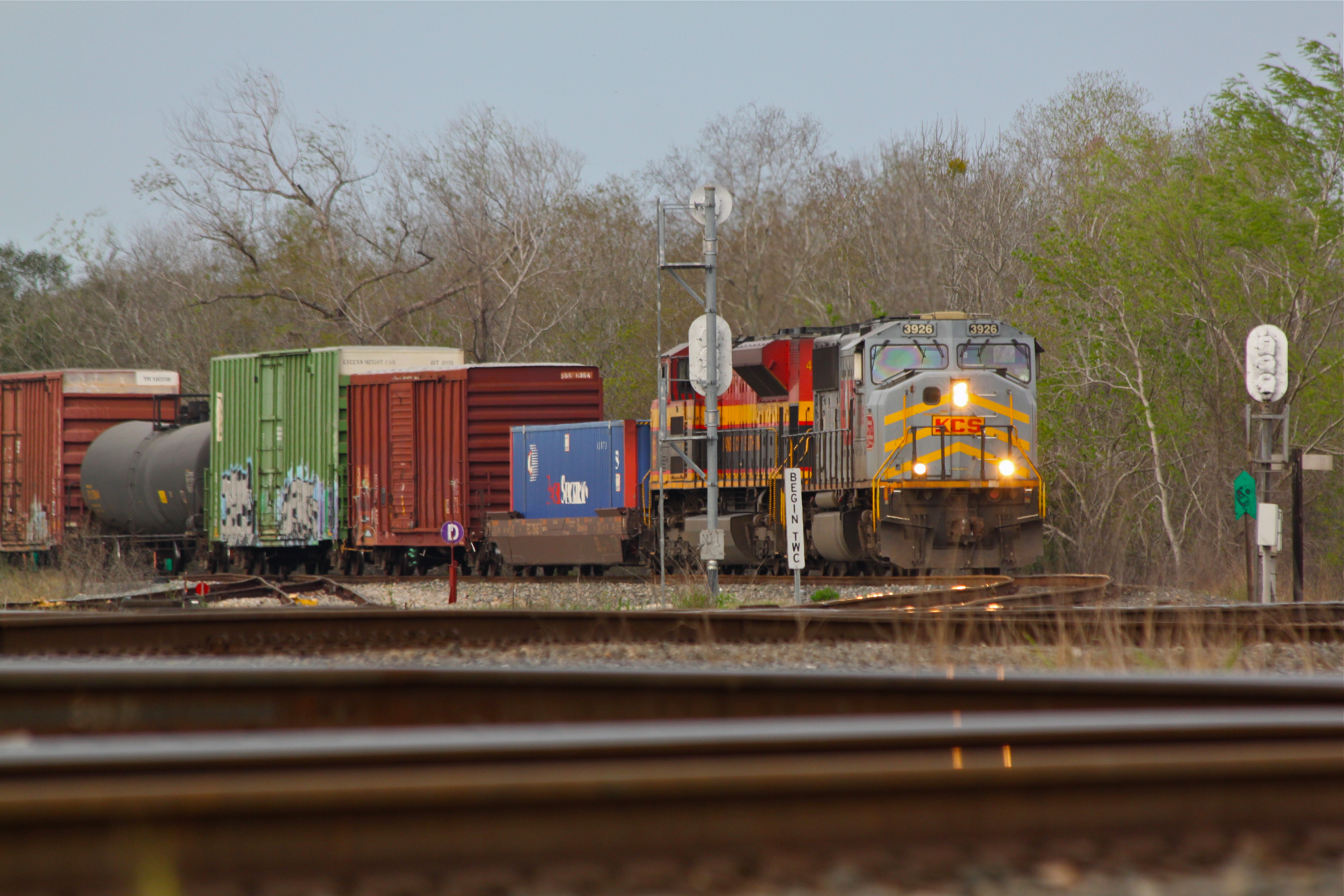
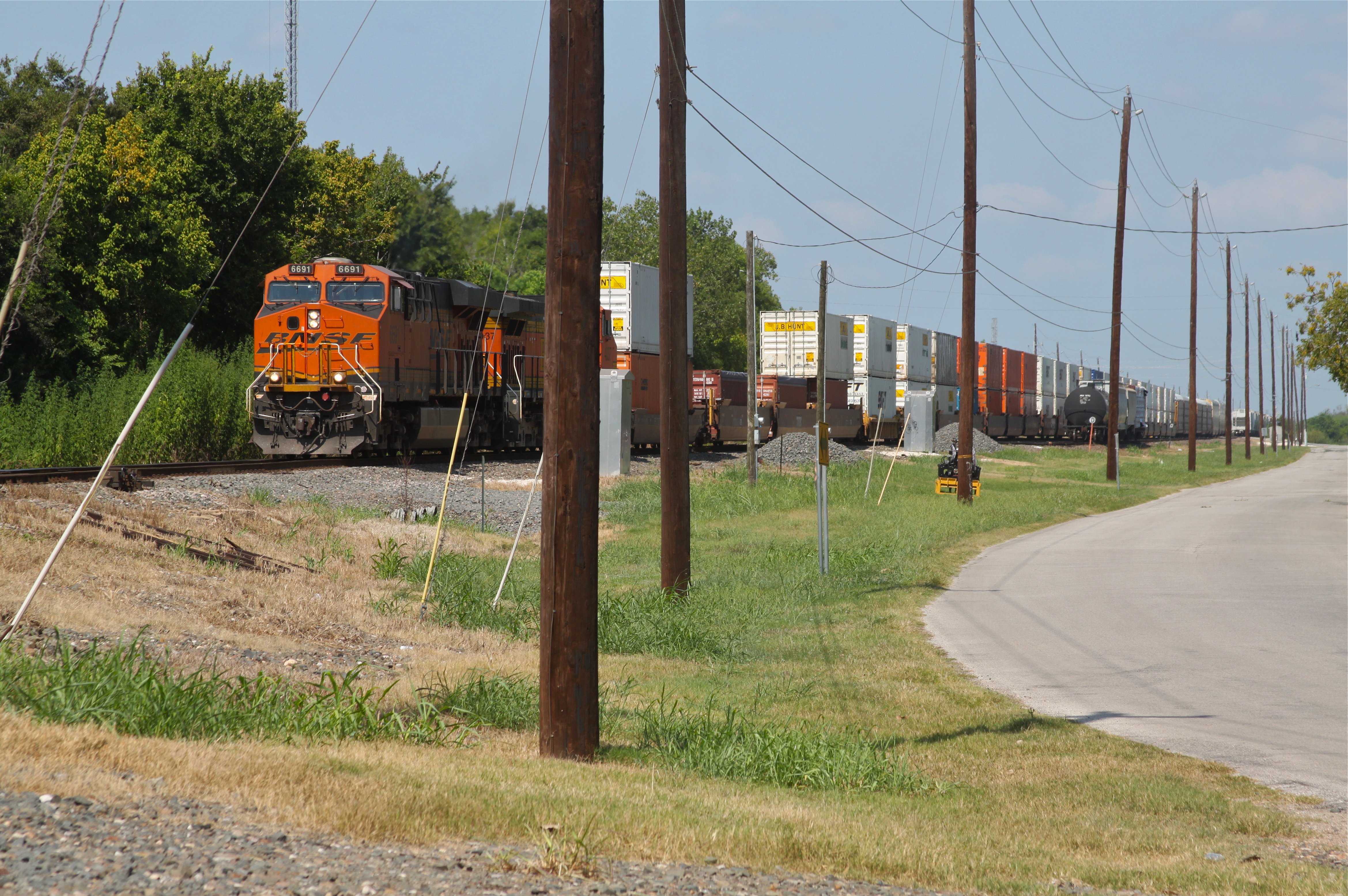
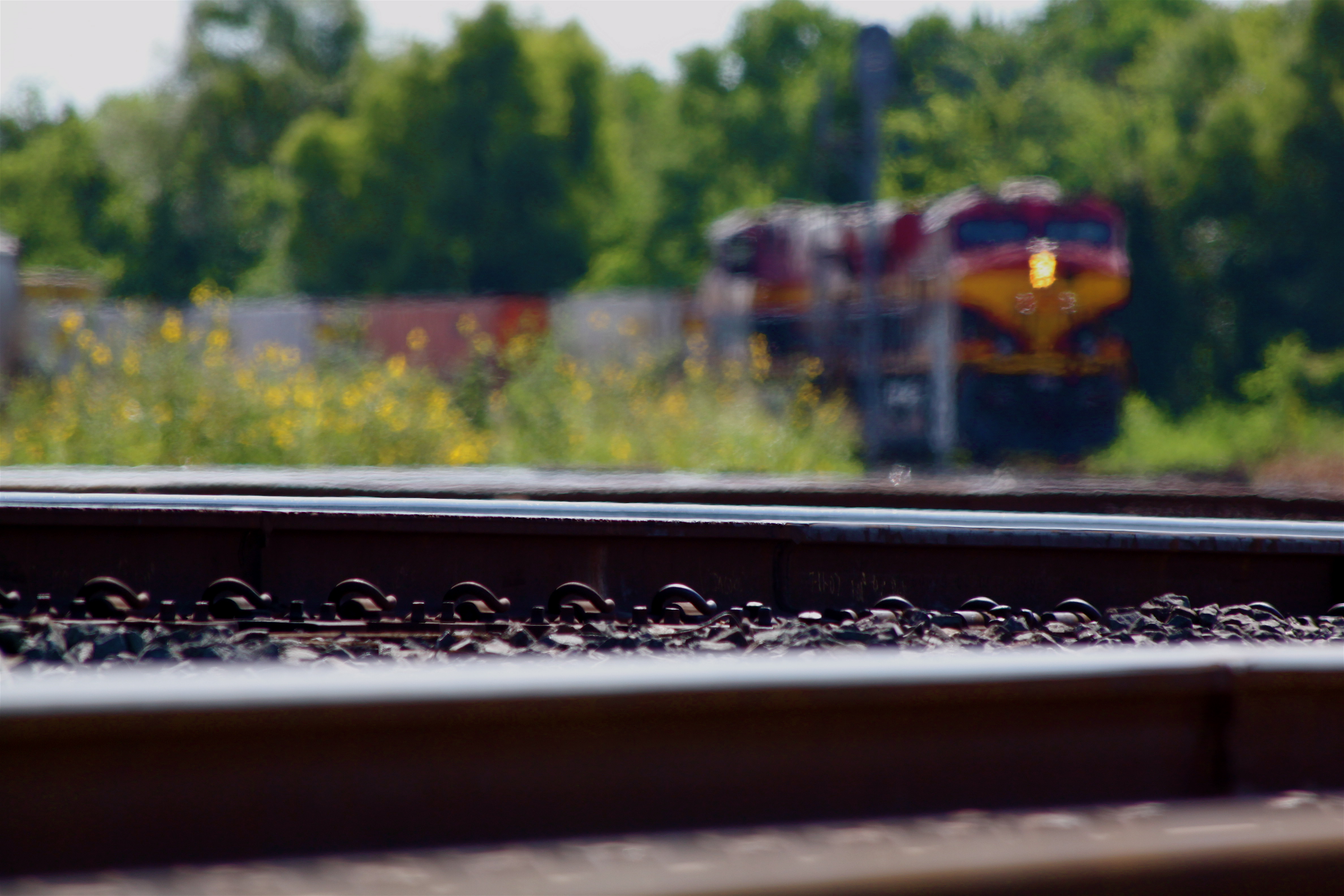
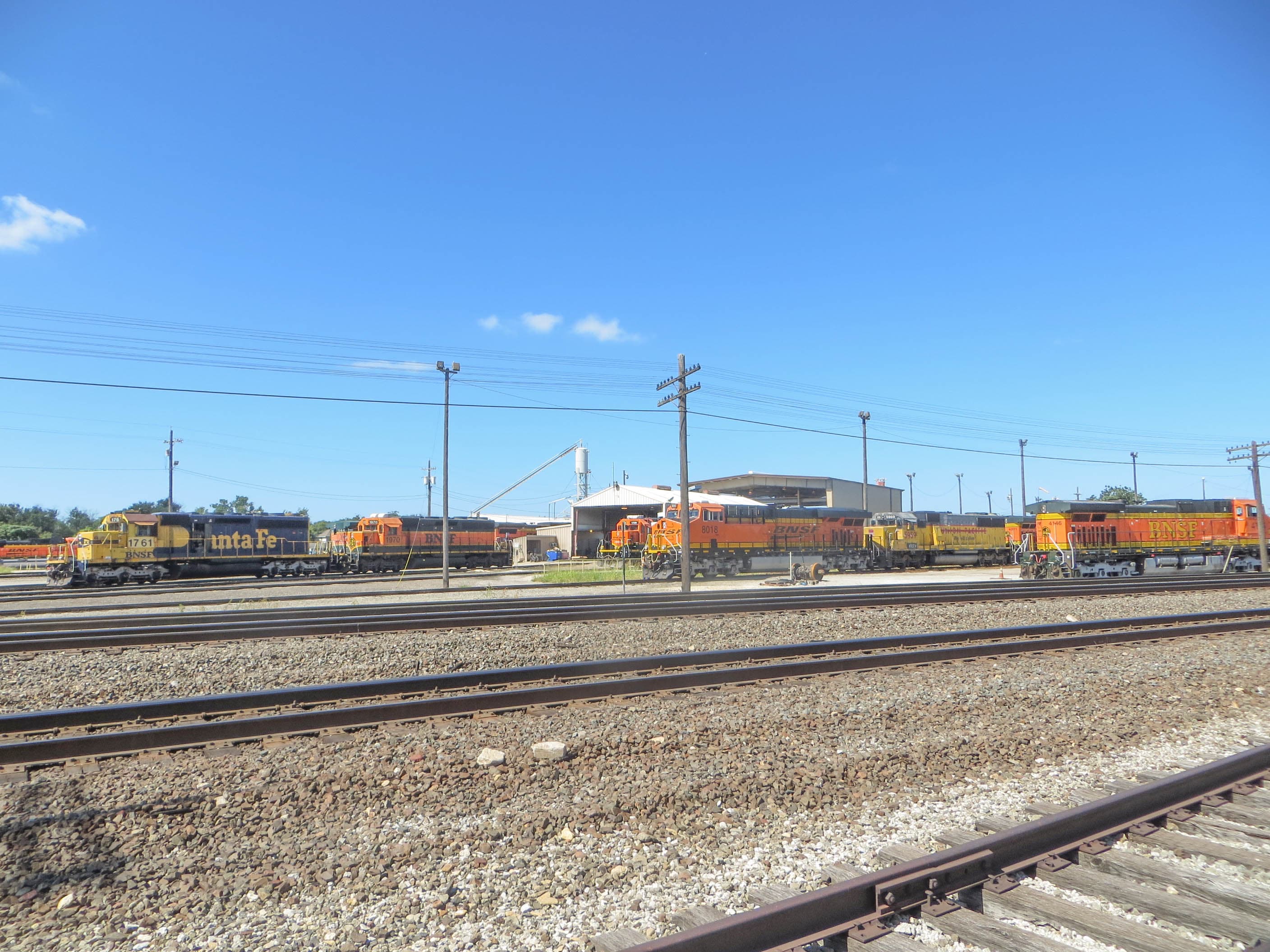
The combination of UP, BNSF, and CPKC ensures a wide variety of motive power: UP's yellow-painted fleet, BNSF orange-and-black units, and CPKC's distinctive maroon-and-grey locomotives. Amtrak's tri-weekly Sunset Limited adds Superliner passenger equipment to the mix.
Frequently Asked Questions
QHow many trains pass through Rosenberg Junction daily?
Approximately 60 or more trains per day across UP, BNSF, and CPKC. One documented 24-hour count recorded 77 train movements.
QIs the Rosenberg Railroad Museum free to visit?
The museum charges a small admission fee (around $7.50 for adults, with senior and military discounts). It is open Wednesday through Friday 10am-3pm, Saturday 10am-4pm, and Sunday 1pm-4pm. Closed Monday and Tuesday.
QCan I watch trains without entering the museum?
Yes. The public sidewalk along Avenue F and the surrounding streets provide close-range views of the tracks and diamond crossing at no cost, 24 hours a day.
QDoes Amtrak stop at Rosenberg?
No. The Sunset Limited passes through Rosenberg on UP's Glidden Subdivision but does not stop here. The nearest Amtrak station is in Houston.
QHow do I get to Rosenberg from Houston?
Take US 59/I-69 southwest from Houston. Exit at State Road 36 (Rosenberg/Needville exit, approximately exit 97). Head north on 1st Street about 1.75 miles to Avenue H, turn right, then left onto 2nd Street, and right onto Avenue F to the museum area. The drive from central Houston takes about 40-50 minutes.
Safety Tips
Stay on public sidewalks and museum grounds — do not trespass on the railroad right-of-way. Trains approach from multiple directions at this junction, so always be aware of your surroundings. Hearing protection is recommended at close range. In summer, bring water, sunscreen, and shade — heat exhaustion is a real risk during extended visits.
Seasonal Information
Summer (June-September) brings extreme heat and humidity with temperatures often exceeding 95°F. Afternoon thunderstorms are common and can be intense. Winter is mild, rarely dropping below 40°F, with clear skies favorable for photography. Spring wildflowers occasionally add color along the right-of-way margins.
Nearby Lodging
- Hampton Inn & Suites Houston - Rosenberg
Mid-range hotel with pool, fitness center, and free breakfast. Located along US 59/I-69 corridor, about 3 miles from downtown Rosenberg.
- SpringHill Suites by Marriott Houston Rosenberg
All-suite hotel with complimentary breakfast and outdoor pool. Located near US 59/I-69, approximately 3 miles from the junction.
- La Quinta Inn & Suites by Wyndham Houston Rosenberg
Budget-friendly option with pool and pet-friendly policy. Close to downtown Rosenberg and the railroad museum.
- Holiday Inn Express & Suites Houston SW - Rosenberg
Mid-range hotel with free breakfast, outdoor pool, and fitness center. Located along the US 59/I-69 corridor.
Nearby Attractions
Museum adjacent to the junction featuring preserved Tower 17, the 1879 railcar "Quebec," a MoPac caboose, model train layouts, and an ATCS real-time train tracking display. Open Wed-Sun.
10 miles / 16 km
Living history museum on a 20,000+ acre working ranch in nearby Richmond. Features homes and exhibits spanning the 1820s to the 1930s, with costumed interpreters and livestock demonstrations.
3.1 miles / 5 km
County history museum in Richmond with exhibits on the region's settlement history, including the 1883 Moore Mansion and 1855 Long-Smith Cottage.
20 miles / 32 km
A 5,000-acre state park with hiking trails, fishing lakes, alligator sightings, and the George Observatory featuring one of the largest publicly accessible telescopes in the U.S.
0.1 miles / 0.2 km
Walkable downtown area with antique shops, boutiques, and local restaurants along 2nd Street and Avenue F, immediately adjacent to the railroad tracks.
Official Resources
Related on Spotatrain
Spots Near Rosenberg
Fostoria (Texas)
A ghost town railfan stop on the BNSF Conroe Subdivision in East Texas, where the former Foster Lumber Company town once thrived. Freight trains roll through the piney woods on the old Atchison, Topeka & Santa Fe mainline between Somerville and Silsbee.
Flatonia (Railfan Tower)
Purpose-built railfan observation pavilion at the diamond crossing of Union Pacific's Giddings and Cuervo Subdivisions in Flatonia, Texas. Tower 3, the original interlocking tower (1902-1996), is preserved nearby in the Rail Park.
Temple (BNSF/UP Crossing)
A major railroad junction in Central Texas where BNSF and Union Pacific lines cross at the historic Tower 24 diamond. The adjacent Temple Railroad & Heritage Museum, housed in the 1911 Santa Fe depot, makes this one of the most railfan-friendly spots in the state.
Waco (BNSF/UP)
Downtown Waco sits on Union Pacific's former Katy Railroad main line, where UP freight and BNSF trains with trackage rights roll through this historic Texas crossroads between the Dallas-Fort Worth metroplex and the Gulf Coast.

Dallas Union Station
Historic 1916 Beaux-Arts station where DART light rail, TRE commuter trains, Amtrak's Texas Eagle, and UP/BNSF freight share tracks in downtown Dallas.
Lafayette (Louisiana)
Downtown Lafayette's Rosa Parks Transportation Center sits on BNSF's Lafayette Subdivision, offering close-up views of UP and BNSF freight trains plus tri-weekly Amtrak Sunset Limited service — all in the heart of Cajun Country.
More Spots in Texas

Tower 55 (Fort Worth)
Tower 55 is the busiest railroad diamond interlocking in the United States outside of Chicago, where BNSF's triple-track north–south main meets Union Pacific's double-track east–west corridor at six grade-level diamond crossings. With roughly 100 trains per day from UP, BNSF, FWWR, Trinity Rail Express, and Amtrak, this Fort Worth junction delivers near-constant rail action from public sidewalks steps away from the interlocking.
Saginaw (UP/BNSF)
Saginaw sits at the junction of three railroad lines—two BNSF subdivisions and one Union Pacific—making it one of North Texas's premier railfan destinations with roughly 40–60 trains daily and a historic depot serving as the viewing base.
Laredo International Railway Bridge (Puente Negro)
North America's busiest rail border crossing, where CPKC freight trains crawl across the Rio Grande between Laredo, TX and Nuevo Laredo, Mexico on the historic Puente Negro — now doubled with a second span opened in 2025.
Amarillo (BNSF/UP)
Major BNSF junction where six subdivisions converge on the Southern Transcon. Crew change point with up to 100+ trains daily, four main tracks, and rich fallen-flag heritage from Santa Fe, Fort Worth & Denver, and Rock Island railroads.
Dalhart (Rail Crossing)
A classic Texas Panhandle railroad junction where BNSF's Dalhart Subdivision crosses Union Pacific's former Golden State Route at grade, with two active yards and crew-change operations in the heart of XIT Ranch country.
El Paso (Union Depot)
Historic 1906 Daniel Burnham-designed neoclassical station on Union Pacific's Sunset Route in downtown El Paso. Offers front-row viewing of 30+ daily freight trains, tri-weekly Amtrak Sunset Limited/Texas Eagle service, and rare cross-border interchange movements to Ciudad Juarez, Mexico.
Related Experiences
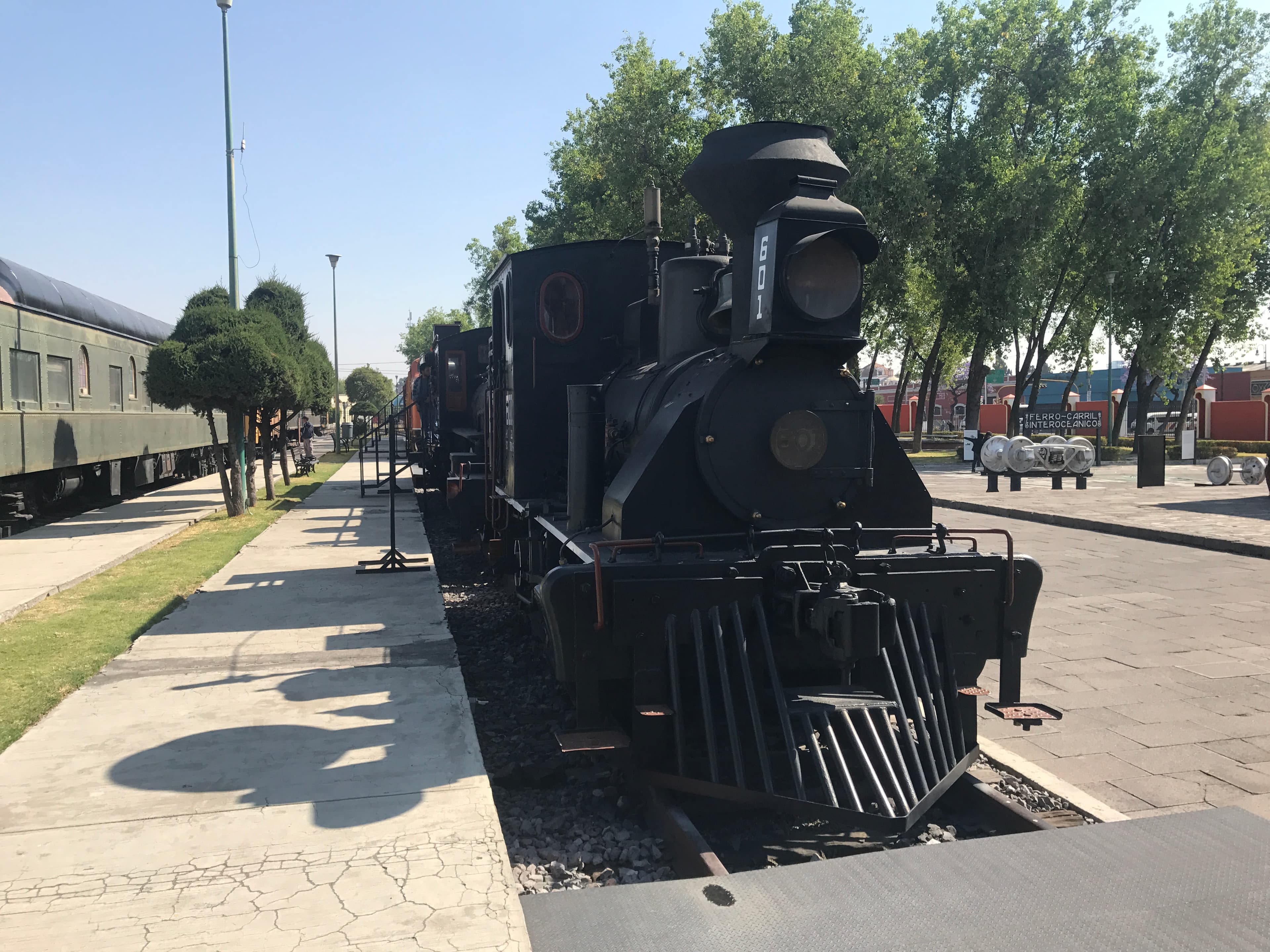
Museo Nacional de los Ferrocarriles Mexicanos
Mexico's national railway museum in Puebla, set in the restored 1869 Ferrocarril Mexicano station with 90+ locomotives and carriages.
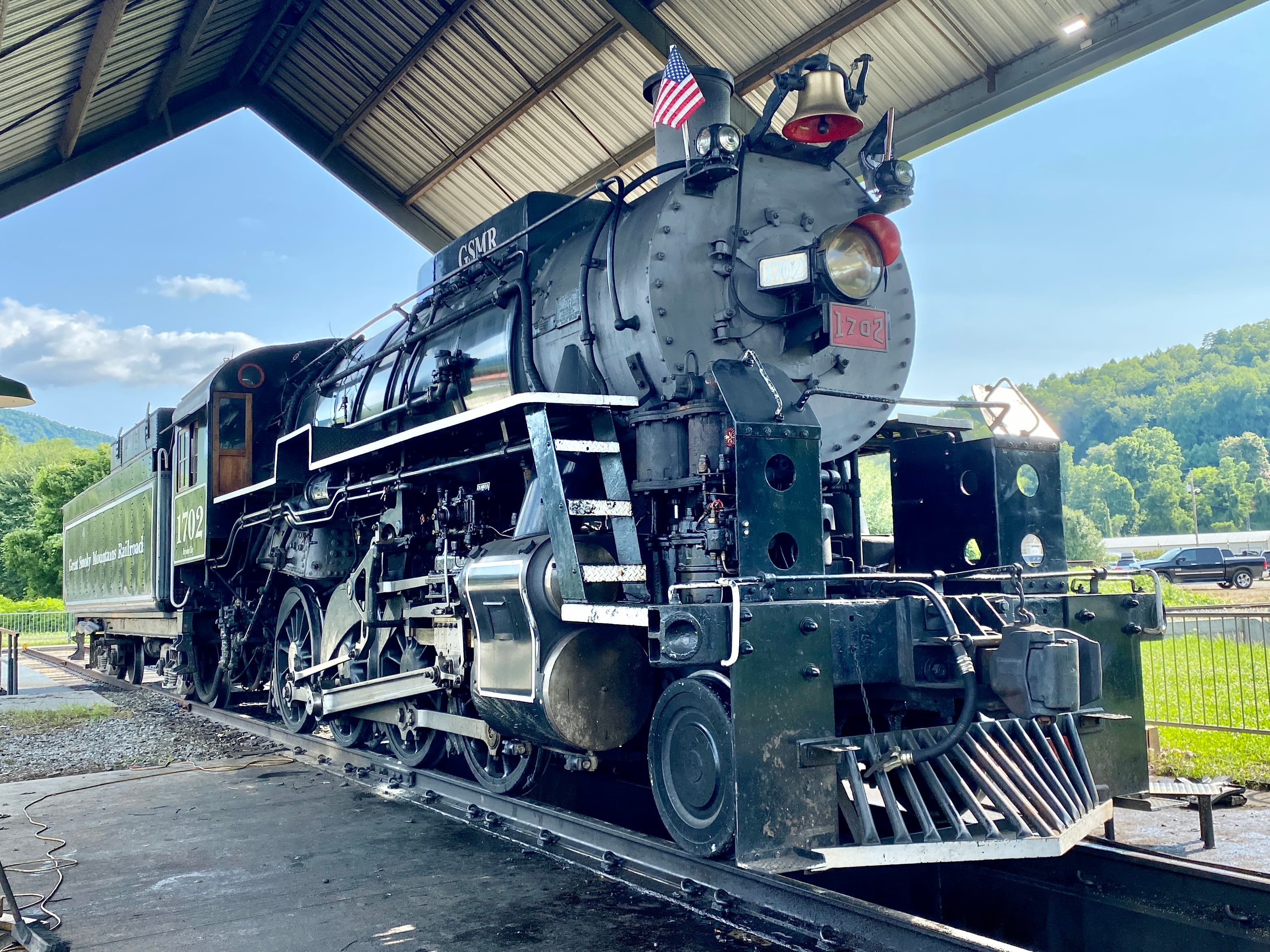
Great Smoky Mountains Railroad
A scenic heritage railroad through North Carolina’s Smoky Mountains, with steam and diesel trains crossing deep gorges and historic trestles.
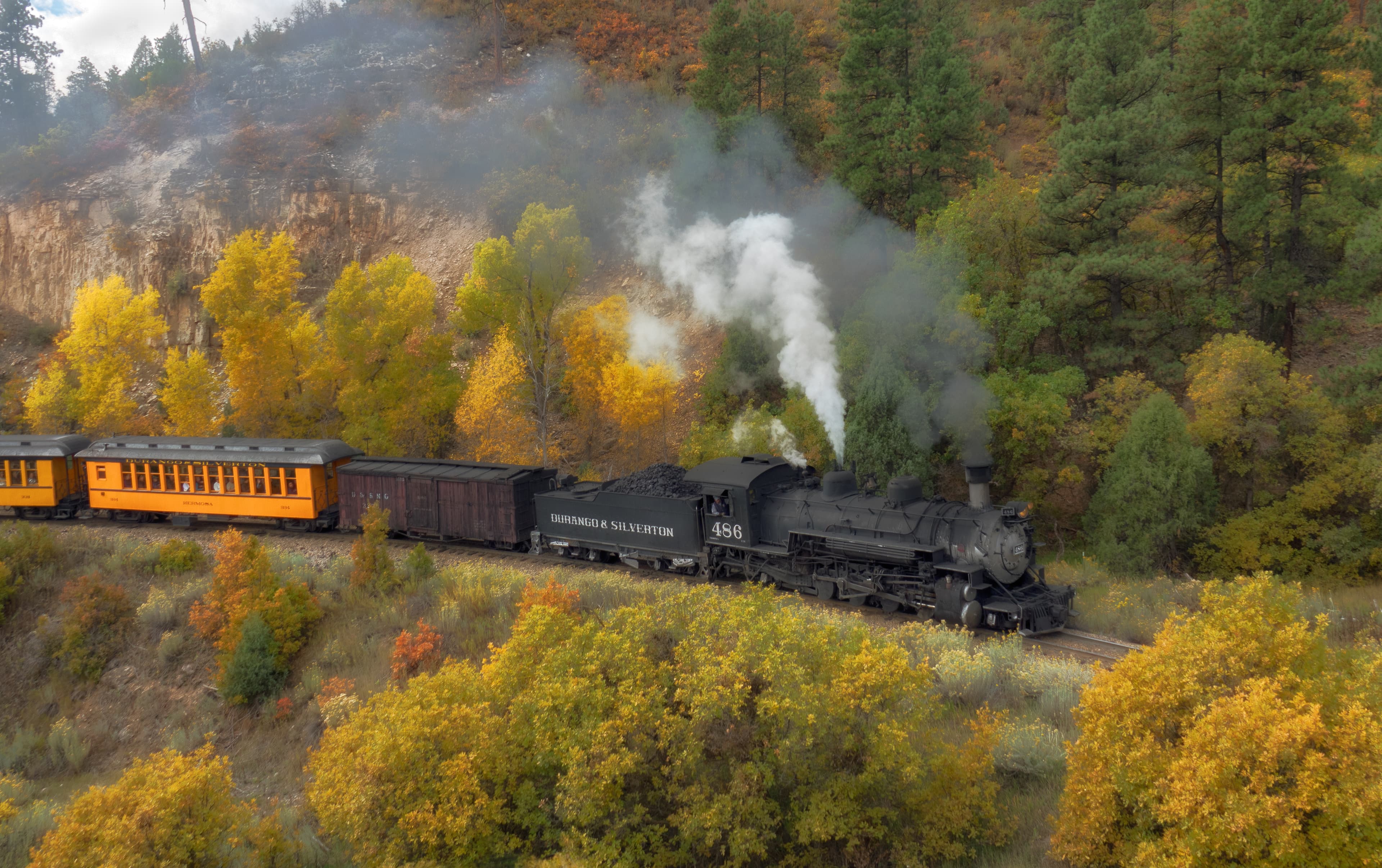
Durango & Silverton Narrow Gauge Railroad
A historic 19th-century steam railway climbing through Colorado’s San Juan Mountains on a narrow-gauge line.
Related Journeys & Mega-Projects
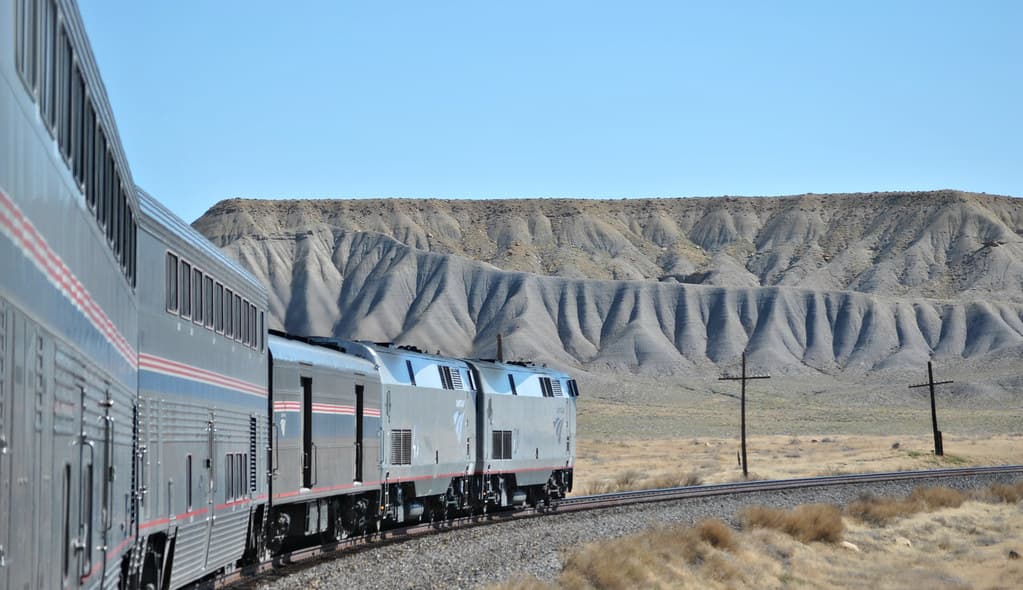
California Zephyr
Chicago to San Francisco across the Rockies and Sierra Nevada
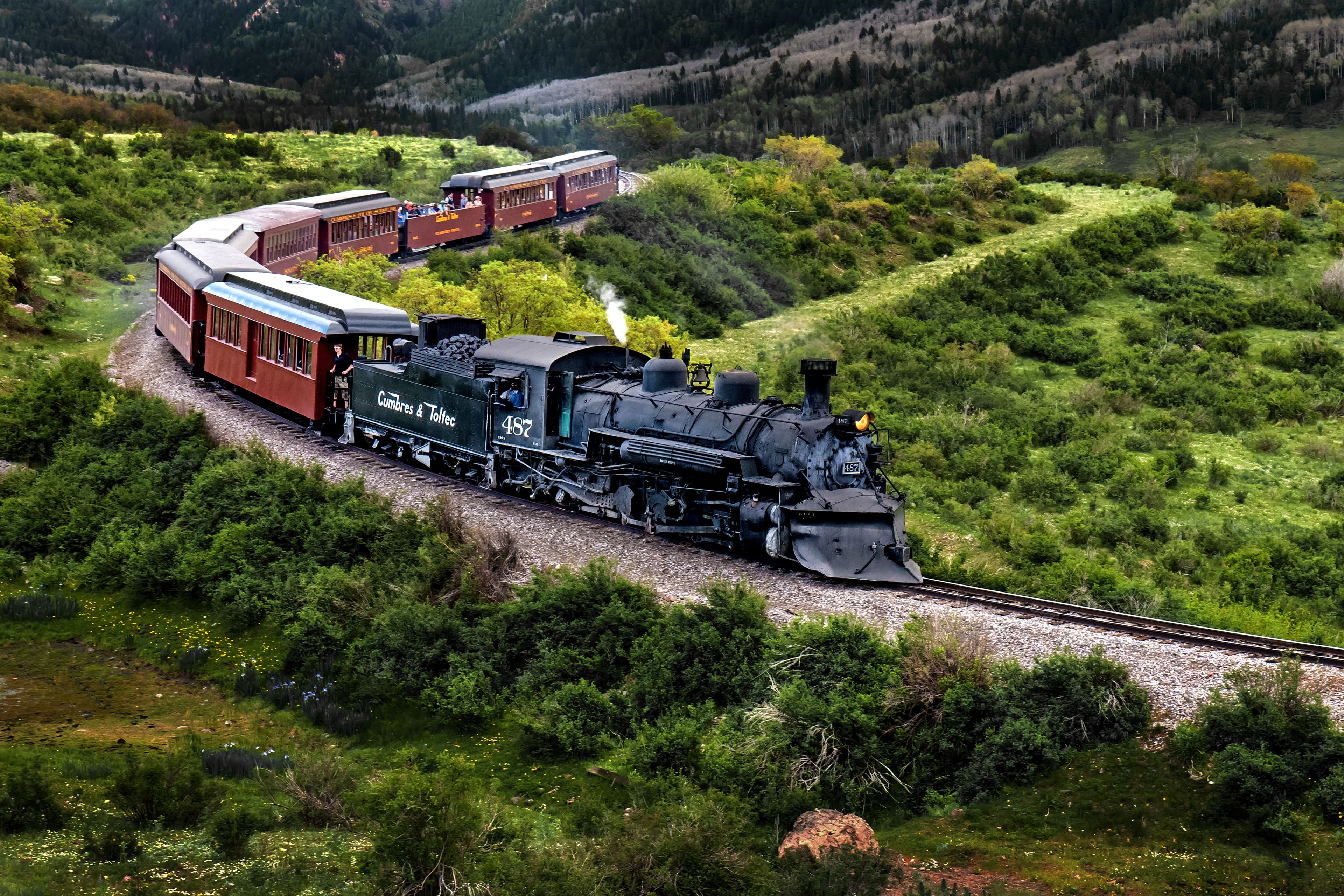
Cumbres & Toltec Scenic Railroad
America's longest and highest authentic steam railroad

Grand Canyon Railway
A 65-mile heritage train journey from Williams, Arizona to the South Rim of the Grand Canyon
Help improve this page
Spotted something out of date or incorrect? Let our community know.
Looking for more spots? Browse the complete list of train spotting locations.
Quick Information
Country
USA
Region
Texas
City
Rosenberg
Spot Type
Yard/Depot
Best Times
Trains run 24/7. Daytime hours offer best photography lighting. Amtrak's Sunset Limited passes tri-weekly. Museum open Wed-Fri 10am-3pm, Sat 10am-4pm, Sun 1pm-4pm.
Visit Duration
2-4 hours
Cost
Free trackside access. Museum admission approximately $7.50 adults.
Train Activity
Train Types
Frequency
Approximately 60+ trains per day across three railroads (UP, BNSF, CPKC)
Access & Amenities
Parking
Available (Free street parking along Avenue F near the museum. Museum parking lot also available.)
Shelter
Available
Restrooms
Available